

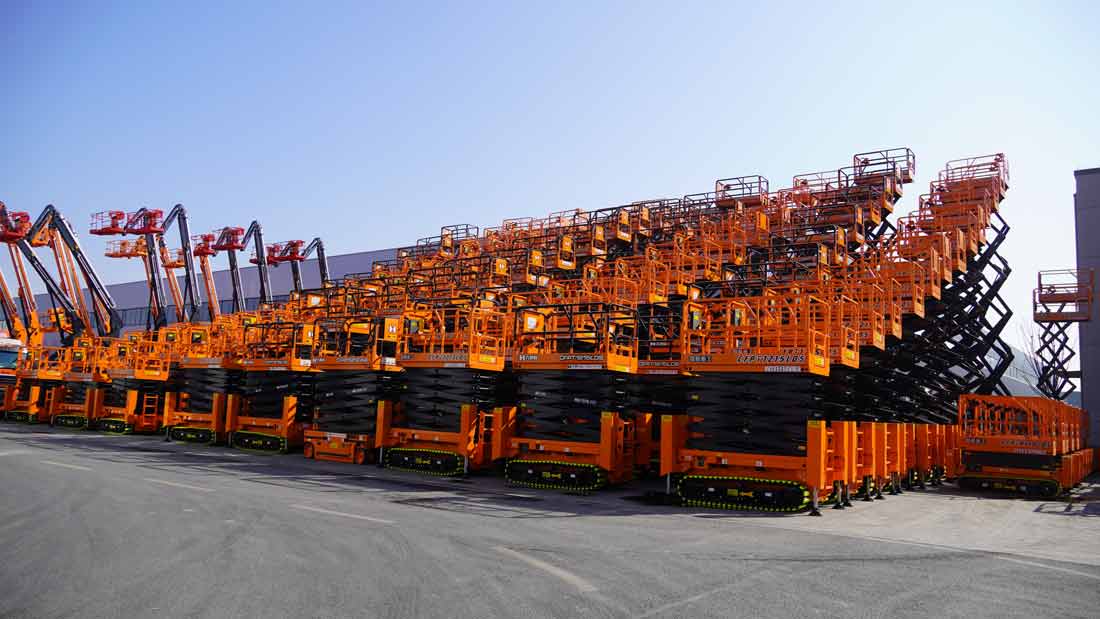
 Choosing the right scissor lift platform can have a major impact on productivity, operating costs, and job-site efficiency. Two of the most common power options are electric and diesel. While both types are designed to lift workers and materials vertically, they are built for different working environments and operating requirements.
Understanding the differences between electric vs. diesel scissor lift platforms can help contractors, rental companies, and equipment buyers select the right machine for indoor, outdoor, and rough-terrain applications.
What Is an Electric Scissor Lift Platform?
An electric scissor lift platform uses rechargeable batteries to power its lifting, driving, and steering systems. Electric models are commonly used in warehouses, factories, shopping centers, indoor construction projects, and other areas where low noise and zero direct exhaust emissions are important.
Many electric scissor lifts are designed for smooth, level surfaces. However, electric rough-terrain scissor lifts are also available and can provide outdoor mobility for selected construction applications.
Main Benefits of Electric Scissor Lifts
Low operating noise
No direct exhaust emissions during operation
Suitable for indoor and enclosed environments
Lower routine maintenance requirements
Smooth and precise movement
Reduced fuel-related operating costs
Suitable for projects with environmental restrictions
Electric models are often a practical choice when the work site has access to reliable charging facilities and requires quiet operation. Genie notes that electric models are frequently used indoors, although some electric scissor lifts are specifically designed for outdoor or rough-terrain use. Genie Scissor Lift Application Guide
What Is a Diesel Scissor Lift Platform?
A diesel scissor lift platform uses an internal combustion engine to provide power. Diesel models are generally associated with rough-terrain applications, including outdoor construction sites, infrastructure projects, industrial maintenance, and uneven or unimproved ground.
Diesel scissor lifts are often equipped with features such as large rough-terrain tires, high ground clearance, four-wheel drive, and oscillating axles. These features help the machine move across demanding outdoor surfaces.
Main Benefits of Diesel Scissor Lifts
Strong performance in outdoor environments
Suitable for uneven or rough ground
Long operating periods with quick refueling
High platform capacity on many models
Strong traction for challenging job sites
Suitable for remote locations without charging access
Diesel machines can be a strong option when the project involves extended outdoor operation, difficult terrain, or limited access to electrical power.
Electric vs. Diesel Scissor Lift Platforms: Key Differences
1. Power Source
The most obvious difference is the power system. Electric scissor lifts use batteries, while diesel scissor lifts use fuel-powered engines.
Electric models need scheduled charging and proper battery care. Diesel models require fuel management, engine servicing, and regular checks of oil, filters, and other engine components.
2. Indoor and Outdoor Use
Electric scissor lifts are commonly selected for indoor projects because they operate quietly and do not produce direct exhaust emissions. They are suitable for warehouses, factories, airports, retail buildings, and interior renovation work.
Diesel scissor lifts are mainly used outdoors because engine exhaust, noise, and fuel storage can create challenges in enclosed areas. They are often better suited to open construction sites and outdoor industrial projects.
However, power source alone does not determine where a machine can be used. Always check the manufacturer’s specifications, indoor/outdoor ratings, ventilation requirements, and local regulations.
3. Terrain Capability
Traditional electric scissor lifts are usually designed for smooth, level floors. Standard models may not be suitable for mud, gravel, steep grades, or uneven construction surfaces.
Diesel rough terrain scissor lifts are typically designed for more demanding outdoor conditions. They may include:
Four-wheel drive
Large foam-filled tires
Increased ground clearance
Oscillating axles
Improved gradeability
Heavy-duty chassis components
Electric rough-terrain models are also becoming more common. Some modern electric models combine battery power with outdoor drive systems and rough-terrain features. JLG, for example, offers electric rough-terrain models with outdoor-oriented performance and drive-at-height capabilities. JLG Electric Rough Terrain Scissor Lift
4. Noise and Emissions
Electric scissor lifts produce significantly less operating noise than diesel models and do not create direct exhaust emissions during use. This makes them useful in noise-sensitive areas and indoor work environments.
Diesel lifts produce engine noise and exhaust emissions. For this reason, they are generally more appropriate for open-air job sites where ventilation is not a concern.
Environmental requirements should always be reviewed before selecting equipment. Some projects may require low-emission or electric equipment because of building policies, local regulations, or sustainability targets.
5. Operating Costs
Electric scissor lifts may have lower routine maintenance and energy costs because they do not require engine oil, fuel filters, spark-related components, or exhaust-system servicing.
Diesel models may consume more fuel and require more frequent engine maintenance. However, diesel equipment can offer greater flexibility on remote sites where charging infrastructure is unavailable.
The total cost of ownership depends on:
Purchase price
Rental rates
Energy or fuel costs
Battery replacement
Engine maintenance
Utilization hours
Transport and storage requirements
Job-site charging or refueling access
A machine with a lower purchase price may not always have the lowest long-term operating cost.
6. Refueling and Charging
Diesel scissor lifts can usually return to work quickly after refueling. This can be valuable on long shifts or remote projects.
Electric models require charging time. Project managers should plan charging schedules carefully and ensure that the correct charging equipment is available. Battery performance can also be affected by operating conditions, machine age, load, and temperature.
For multi-shift operations, buyers may need additional batteries, fast-charging systems, or a well-planned fleet rotation strategy.
Electric vs. Diesel Scissor Lift Comparison
| Feature | Electric Scissor Lift | Diesel Scissor Lift |
|---|---|---|
| Typical environment | Indoor and low-noise areas | Outdoor construction sites |
| Direct exhaust emissions | None during operation | Yes |
| Operating noise | Low | Higher |
| Terrain capability | Smooth surfaces; some RT models available | Strong rough-terrain performance |
| Energy supply | Rechargeable battery | Diesel fuel |
| Maintenance | Generally lower routine maintenance | Regular engine and fuel-system service |
| Charging or refueling | Requires charging time | Quick refueling |
| Best suited for | Warehouses, factories, indoor construction | Outdoor and remote job sites |
| Environmental impact | Lower local emissions | Higher local emissions |
| Key planning issue | Charging infrastructure | Fuel supply and ventilation |
Which Scissor Lift Platform Should You Choose?
The best choice depends on the work environment rather than the power source alone.
Choose an electric scissor lift when:
The project is indoors or in an enclosed area
Low noise is important
Direct exhaust emissions are restricted
Charging facilities are available
The ground is smooth and stable
Precise and quiet operation is required
Choose a diesel scissor lift when:
The project is outdoors
The ground is uneven, muddy, or unimproved
Extended operation is required
Charging access is limited
High traction and rough-terrain mobility are priorities
The work site is remote or constantly changing
A rough terrain scissor lift may be the best solution for outdoor construction, but both electric and diesel rough-terrain models should be evaluated according to their rated capacity, gradeability, platform height, ground clearance, and manufacturer specifications.
Safety Considerations for Both Types
Regardless of the power source, operators must receive proper training and follow the manufacturer’s instructions. Before each shift, inspect the platform, guardrails, controls, tires, brakes, lifting mechanism, alarms, and emergency systems.
Operators should also:
Never exceed the rated platform capacity
Keep the platform gate closed
Remain inside the guardrail system
Check ground conditions before traveling
Maintain clearance from overhead hazards and power lines
Use a spotter in congested areas
Avoid operating in unsafe weather conditions
Report defects immediately
OSHA recommends inspecting scissor lift controls and components before use, maintaining guardrail systems, and verifying that the brakes hold the machine in position. OSHA Scissor Lift Safety Guidance
Frequently Asked Questions
Are electric scissor lifts better than diesel models?
Neither type is universally better. Electric lifts are often better for indoor, quiet, and low-emission applications, while diesel lifts are commonly preferred for outdoor and rough-terrain work.
Can an electric scissor lift be used outdoors?
Yes. Some electric scissor lifts are designed for outdoor use, including electric rough-terrain models. Always verify the machine’s surface, weather, grade, and operating limitations.
Are diesel scissor lifts suitable for indoor use?
Diesel models may create exhaust and noise concerns indoors. Indoor use depends on ventilation, regulations, manufacturer approval, and the specific work-site conditions.
Which type costs less to maintain?
Electric scissor lifts generally require less routine powertrain maintenance, but battery replacement and charging infrastructure should be included in the ownership calculation.
Conclusion
The choice between electric vs. diesel scissor lift platforms depends on terrain, work location, operating hours, environmental requirements, charging access, and total ownership costs.
Electric scissor lifts are often ideal for quiet, clean, and controlled environments. Diesel scissor lifts are well suited to demanding outdoor and rough-terrain applications. By comparing the machine’s specifications with the actual job-site conditions, buyers can select a scissor lift platform that improves productivity while supporting safe and efficient operation.
Specifications and regulations vary by manufacturer, model, industry, and location. Always consult the operator’s manual and applicable local safety requirements before using a scissor lift.